





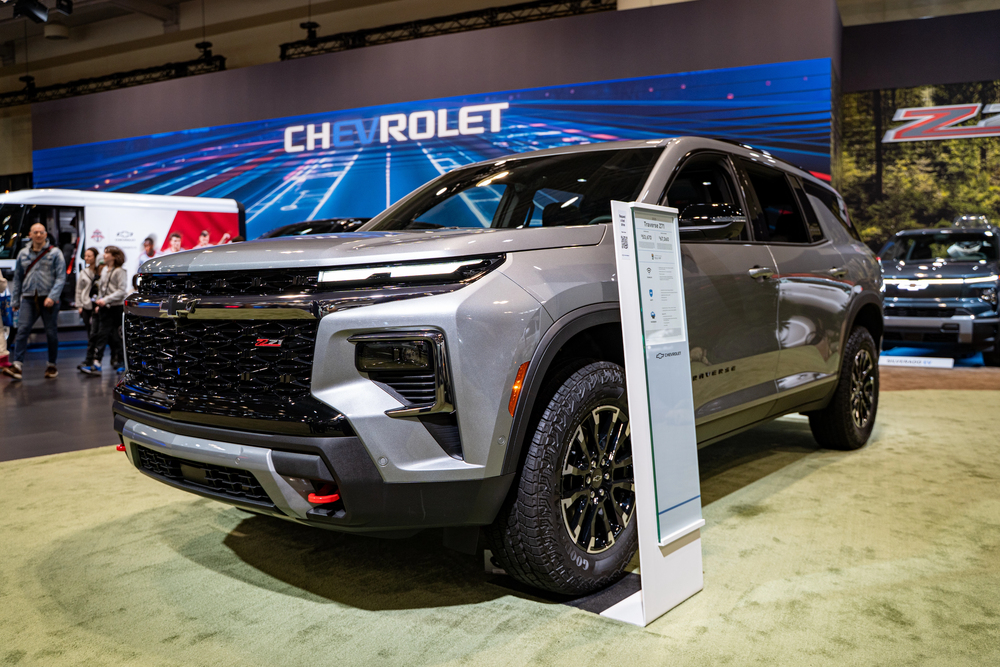
The midsize SUV segment keeps evolving, and two models often placed head-to-head are the 2025 Ford Explorer and the 2024 Chevrolet Traverse. Families, commuters, and adventure-seekers looking for a blend of power, space, and tech will find both appealing. But when comparing the 2025 Ford Explorer vs. 2024 Chevrolet Traverse, small differences in design and execution can have a big impact.
These two SUVs represent very different approaches to everyday driving. One leans into athleticism and punchy performance, while the other emphasizes comfort, spaciousness, and everyday usability. Both are packed with modern features, but subtle design choices affect how they fit into real-world needs. This head-to-head comparison covers everything from engine strength to seating layout, technology, and long-term ownership experience, giving you a full picture of what each model offers. If you’re shopping for your next SUV, this breakdown will help you decide which one checks the right boxes.
Power and Performance: Engines That Move You
The Ford Explorer rolls out with a standard 2.3‑liter turbo‑four that delivers around 300 hp and nearly 310 lb‑ft of torque. It’s responsive on highways, holds speed well, and delivers a lively feel for everyday driving. For those seeking more oomph, Ford throws in an optional 3.0‑liter twin‑turbo V6, especially in ST and Platinum trims. That V6 pushes roughly 400 hp and over 415 lb‑ft of torque. It sounds exciting and hits 60 mph in the mid-5-second range, which is sporty for its class.
Still, the hybrid model sticks with the 2.3-liter engine combined with an electric motor, offering better fuel numbers but modest power. Its overall feel is more eco-focused and less thrilling than the V6.
By comparison, the Chevy Traverse takes a different route. It uses a tried-and-true 2.5‑liter turbo‑four, producing between 315 and 328 hp depending on the trim. Torque hovers around 317 to 326 lb‑ft. Paired with an 8-speed automatic, this setup offers strong acceleration and smooth shifts. In real-world driving, it keeps pace with its rivals while promising slightly better fuel numbers.
When it comes to towing, both tow up to about 5,000 pounds. But the Traverse’s torque-rich turbo setup gives it an edge during everyday hauling, especially with heavier passengers or trailer loads. Meanwhile, the Explorer’s twin-turbo V6 shines during quick bursts or highway passing thanks to its broader power spread.
In short, the Ford Explorer offers a sporty, redline-loving V6 driving punch. But the Traverse gives you power where it matters: quick, smooth, and usable without chasing thrills.
Fuel Economy: Letting Miles Stretch
If everyday driving efficiency matters, each SUV offers decent numbers. The standard Explorer with rear-wheel drive returns around 20 mpg city and 29 mpg highway. Add all-wheel drive, and those numbers drop slightly (closer to 18/25 mpg) especially in heavier configurations.
On the other hand, the Chevy Traverse aims for balance. Its front-wheel-drive models manage about 20 mpg city and 27 mpg highway. Even with AWD, you’re looking at close to 19/24 mpg, which is still strong for a three-row SUV with nearly identical towing capacity.
Real-world drivers often say the Traverse hits those estimates and saves at the pump over time. That may not be dramatic, but it adds up on longer trips or daily haul duties. Contrast that to Explorer owners who hot-foot it with a V6 engine and likely experience low-20s fuel economy. This is fine, but it does not stand out.
Driving Comfort: Relaxed or Sporty?
Inside the Explorer, ride comfort feels refined and controlled. It handles curves with confidence, and higher trims (especially ST-Line) sharpen the steering for a sporty vibe. The adaptive suspension in Platinum models softens bumps without losing composure. Still, some notice firm ride quality when pushed hard, and highway wind noise creeps in.
The Traverse is tuned more for cruising. Its suspension smooths out rough pavement, and lanes feel composed. You won’t feel tossed around, but you also won’t get razor-sharp feedback in twists and turns. Instead, it glides, settles, and relaxes. This makes it great for family hauls or long drives.
Some drivers mention the turbo engine gurgles under heavy acceleration. Horsepower is solid, but the note isn’t quiet. The Explorer’s twin-turbo V6 sounds sharper, but the noisy cabin outweighs the rush for riders in the third row or shorter commutes.
Interior Space and Design
The cabin shapes a big part of any SUV’s appeal. The Explorer’s redesign brings a slick, modern feel. You get a stacked layout with a 13.2-inch touchscreen on top and a 12.3-inch digital gauge panel behind the wheel. There’s wireless phone charging, available massaging seats, and heated rows all around. Third-row access is smoother than before, and entry feels upscale. Yet some materials, especially plastics lower down, feel less premium than expected at this price point.
On the Traverse side, the interior is simple but functional. Materials are practical and resilient. Plastics are firm, but seams align well, and surfaces resist fingerprints. The 17.7-inch touchscreen takes center stage, hosting Apple CarPlay, Android Auto, wireless connectivity, and Chevy’s intuitive interface. Digital cluster layout is clean, though not as customizable. Still, most folks find controls easy and logical.
Space-wise, it’s tough to beat the Traverse. Behind the third row, you get about 23 cubic feet of cargo room. Fold that row down, and you unlock nearly 58 cubic feet, which is enough for weekend gear. With both rear rows folded, cargo space reaches close to 98 cubic feet. This is roomy even among large crossovers.
Explore offers respectable numbers too: around 63 cubic feet with the third row dropped, and up to 87 cubic feet in total. It’s good, but falls a bit short of the Traverse’s bench-press capacity.
Seating and Comfort for Families
Front seats in both SUVs are supportive and adjustable. Higher trims of the Explorer offer features like massaging, ventilated, and power-adjustable seats with memory. It feels premium.
The Traverse doesn’t go all-out here. It opts for heated front seats and optional leather trim in premium trims. But Chevrolet emphasizes durability. Seat fabrics resist spills and stains, and seams are reinforced for kids and cargo wear.
Second-row seating also differs. The Explorer offers a flip-flat bench or optional captain’s chairs, which are great for comfort and access. Legroom is generous. The third row is better than past models but remains snug for full-size adults on long hauls.
The Traverse’s second row seats three, with slide-and-tilt access to the back. On higher trims, captain’s chairs replace bench seating, opening up aisle space. Third-row passengers enjoy decent legroom and supportive seats. It’s roomier than most competitors and holds up well into adulthood.
Technology and Connectivity
Ford adds plenty of tech to the Explorer. The large touchscreen integrates Google-built-in apps. A 12-inch digital cluster is crisp and customizable. Premium B&O speakers and ambient lighting deliver a near-luxury feel. Ford’s Co-Pilot360 includes lane-centering, adaptive cruise, blind-spot assist, and highway autopilot (BlueCruise). This makes it functional, especially if you’re in the ST-Line or Platinum group.
Chevy includes the same kind of tech, focused on simplicity. The 17.7-inch screen is easy to reach and read. Wireless phone pairing, HD radio, and over-the-air updates are standard. Sound systems range from six-speaker to Bose premium, depending on trim. Equally important, Chevy offers its Super Cruise hands-free highway driving system. This is a strong alternative to Ford’s version.
Despite Explorer’s sleek screens, some owners find Ford’s interface less intuitive, with menu nesting deeper than expected. Chevy’s system doesn’t break new ground, but it does what most drivers need, without distraction.
Safety, Assistance, and Driver Confidence
Both the 2025 Explorer and 2024 Traverse focus on family-first safety. Ford’s Co-Pilot360 system covers most bases, including automatic emergency braking, blind spot warnings, lane keep assist, and adaptive cruise. Higher trims include BlueCruise, Ford’s hands-free highway tech. It works well but is available only on select roads and trim levels.
Chevy’s answer is a safety suite that comes standard on every Traverse. Automatic braking, lane keep assist, pedestrian braking, and forward collision alerts are all part of the package. Available Super Cruise puts the Traverse a step ahead. Drivers can take their hands off the wheel on thousands of mapped roads while the system handles steering and speed. It’s reliable, smooth, and doesn’t feel experimental. For long drives or heavy traffic, it helps reduce fatigue.
Rear seat reminder, rear park assist, and HD surround view are available on higher Traverse trims. The layout is simple and uses real knobs for quick access. While both SUVs deliver strong safety features, the Traverse makes them more widely accessible across trims.
Long-Term Value and Ownership Costs
The upfront cost difference between these two SUVs can be small, depending on trim. But over five years, the Traverse tends to deliver more value. That starts with better fuel economy. The 2.5L turbo engine sips fuel without giving up power, especially in city driving.
Insurance costs tend to lean slightly in Chevy’s favor. Its reputation for straightforward maintenance and fewer high-performance trims helps keep premiums manageable. Ford’s ST and Platinum models often come with higher insurance costs due to added power and repair complexity.
Maintenance is another angle where Chevy shines. Its new engine is built for durability and ease of service. Explorer’s V6, while exciting, includes more moving parts and potential repair points down the line. When families want reliability that doesn’t eat into the budget, that difference matters.
Chevrolet also gives more value at the entry level. The Traverse comes with AWD standard. Ford starts with rear-wheel drive and charges extra for AWD on most trims. That affects not just driving confidence but long-term resale value in colder states.
Best Trims for Value
Ford’s Explorer lineup includes the Active, ST-Line, ST, and Platinum. ST is performance-focused with sport-tuned suspension and a turbo V6. Platinum adds luxury details and premium tech. ST-Line offers sporty styling but skips the performance engine.
Chevy keeps it simpler. The Traverse LS is the base model, but even it gets a large touchscreen and a full safety suite. LT adds heated seats, larger wheels, and more comfort features. Z71 brings off-road capability. The RS finishes things off with blacked-out accents, premium interior trim, and Super Cruise.
For most buyers, the Traverse LT is the standout. It delivers the best mix of features and price. It feels upscale without stepping into luxury-level pricing. If style and top-end tech matter more, the RS has the edge. In Explorer’s camp, the ST-Line balances price with nicer aesthetics. But to match what the Traverse offers at the LT level, you’ll usually have to climb higher in the Ford lineup.
How Fairfield Chevrolet Can Help
At Fairfield Chevrolet, we carry the full lineup of 2024 Chevy Traverse models. That means you can test drive different trims on the same day, compare features, and choose what fits your needs without pressure. Our team walks you through tech features like Super Cruise, touchscreen navigation, and wireless smartphone pairing. We take time to explain what makes each trim different.
If you’re looking at the 2025 Explorer, we can help you line up a real comparison. We know how these SUVs perform in local conditions and how they fit the needs of growing families. From fuel savings to interior layout, we’ll walk through every detail.
We also support our customers after the sale. Our service team knows the Traverse inside and out. We use genuine GM parts and offer flexible scheduling for routine maintenance. When you buy from us, you’re part of our Fairfield Chevrolet family. That means better service and long-term support you can count on.
Which SUV Wins?
There’s no wrong choice between the Explorer and the Traverse. Both are comfortable, capable, and packed with features. The Explorer shines with its sportier feel and powerful V6 in ST trims. For those who want speed and performance tuning, it hits the mark.
But for buyers looking for more room, better fuel efficiency, and smarter packaging, the Traverse comes out ahead. Its large touchscreen, hands-free Super Cruise, and adult-friendly third row all push it forward. Families, road trippers, and value-seekers will find a lot to like without needing to spend top dollar.
At Fairfield Chevrolet, we invite you to experience the 2024 Traverse for yourself. Contact us today and come in for a test drive. Let’s find the right fit for your lifestyle.
Connect with us


