





The midsize SUV market is one of the most competitive in today’s automotive world. Buyers want a vehicle that can carry their families, handle daily commutes, and perform confidently on highways or winding roads. Two popular choices in this category are the 2025 GMC Acadia and the 2025 Chevy Traverse.
Comparing the 2025 GMC Acadia vs. 2025 Chevy Traverse highlights how closely related yet distinctly different these SUVs are. While both share GM engineering, they pursue different strengths.
If you have been curious about the Chevy Traverse 2025 or wondered how the redesigned 2025 GMC Acadia stacks up, this in-depth comparison will help. We will explore design, engines, suspension, and real-world road feel. By the end, you will have a clearer idea of which SUV handles better and which one might suit your driving needs.
Design and First Impressions
The first glance at an SUV often sets expectations for how it will drive. The 2025 GMC Acadia presents itself with a refined, almost truck-inspired stance.
GMC reduced its footprint compared to older generations, giving it a slightly more compact feel that translates to nimble maneuvering in crowded areas. Its squared-off lines and upright grille contribute to a sense of toughness, which many drivers associate with solid road presence.
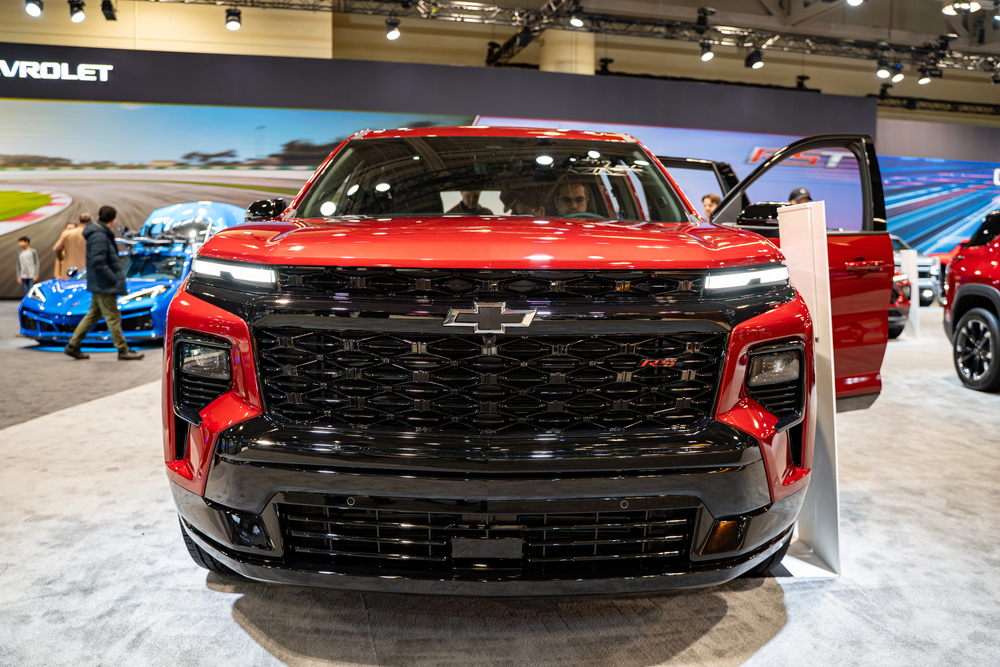
The 2025 Chevy Traverse heads in a different direction. Redesigned for this model year, it shows a sportier, more athletic character.
Its body stretches longer, giving passengers generous space, but it also wears sharper design cues. The RS trim amplifies this impression with darker accents and aggressive styling, suggesting stability and confidence at higher speeds.
Between the two, the Traverse feels more like a highway cruiser, while the Acadia leans toward a balance of city and suburban driving agility. These design choices hint at the distinct handling characteristics that drivers will notice once behind the wheel.
Engine Options and Power Delivery
Power is central to how an SUV handles, and here the differences are interesting. The 2025 GMC Acadia now comes standard with a turbocharged four-cylinder engine. This engine balances efficiency with responsive acceleration, making the Acadia feel energetic around town.
The smaller footprint complements the turbo engine, giving the SUV a punchy quality in stop-and-go traffic. Drivers who value quick throttle response during urban commutes may appreciate this combination.
The 2025 Chevrolet Traverse also uses a turbocharged four-cylinder, replacing the naturally aspirated V6 of earlier generations. However, GM tuned the Traverse engine for a broader torque curve, ensuring steady power delivery even when the SUV is fully loaded with passengers and cargo.
This matters on the highway, where merging or overtaking requires confidence. The Traverse feels less strained when pushed hard, which adds to its sense of composure on long drives.
Suspension and Ride Quality
Suspension tuning plays a major role in how SUVs manage different roads. GMC has given the Acadia a suspension setup that feels firm and controlled, particularly in trims like the AT4, which are designed with off-road confidence in mind.
On paved roads, this firmness translates to reduced body roll in corners. Drivers may notice a sense of sharpness when steering into curves, an advantage for those who like sportier handling.
The Chevy Traverse, by contrast, has a suspension tuned for comfort across long distances. Engineers built it to absorb imperfections in the road, keeping passengers comfortable even on rougher highways.
The ride is smoother and more forgiving, which matters when families spend hours inside. At the same time, the Traverse’s longer wheelbase helps it feel planted and stable at higher speeds. While it may not corner with the same eagerness as the Acadia, it compensates by inspiring confidence during long highway cruises.
Drivers who prefer crisp responsiveness may enjoy the Acadia’s firmer setup, while those who want a refined, comfortable ride over miles of pavement will likely gravitate to the Traverse.
Steering and Responsiveness
Steering is the point of connection between driver and road, and it can make or break handling impressions. The 2025 GMC Acadia, thanks to its slightly smaller dimensions, offers a tighter turning radius.
This advantage becomes clear in urban driving, where parking spaces are tight and quick maneuvers are common. The steering feels light but accurate, encouraging confidence when weaving through city traffic.
The Traverse, larger in size, focuses on delivering predictable steering that suits its role as a family carrier. The steering weight is well balanced, neither too heavy nor too light, and its predictability is its greatest strength.
On highways, the Traverse tracks straight with minimal corrections, reducing driver fatigue. It may not feel as nimble as the Acadia in small spaces, but it rewards drivers with stability when traveling at higher speeds or carrying more weight.
The two approaches highlight their target buyers. Acadia works well for those who spend more time in suburban or city environments, while Traverse feels tailored for drivers who value highway poise and reassurance.
Handling in Real-World Conditions
Beyond specifications, what matters most is how each SUV feels in real-world conditions. In city driving, the Acadia’s compact design gives it an edge.
Parking garages, narrow lanes, and crowded intersections feel more manageable with its smaller body and responsive engine. Drivers who want agility in everyday errands may prefer this characteristic.
On the open highway, however, the Traverse shines. Its longer body and tuned suspension create a calm and controlled ride.
Even at higher speeds, the Traverse resists sway, giving passengers a smoother experience. Families will find that children rest more easily during long drives, and drivers enjoy fewer corrections during extended commutes.
Both models offer all-wheel drive, which adds confidence in poor weather or on rougher roads. The Acadia’s AT4 trim even includes terrain management systems, making it capable in light off-road situations.
The Traverse counters with stability-focused systems, making it a strong choice for those who spend long hours covering distance in varied conditions. The choice here depends on driving lifestyle: urban and adventurous drivers may find Acadia appealing, while highway travelers lean toward Traverse.
Technology that Supports Handling
Modern handling extends beyond mechanical engineering, with technology enhancing control and safety. Both SUVs offer stability control, traction management, and driver assistance features.
The Acadia, especially in trims like AT4 and Denali, integrates systems that allow drivers to switch between drive modes depending on terrain. These include snow, sport, and off-road settings, enhancing adaptability.
The Traverse takes a different approach. Technology here emphasizes ease of long-distance driving.
Adaptive cruise control, lane-centering, and advanced driver assistance features are widely available, giving drivers extra confidence during extended trips. By reducing the mental load, these systems contribute to a sense of calm handling that feels composed and reliable.
In both vehicles, technology enhances the driver’s confidence, but the Acadia leans toward versatility while the Traverse leans toward convenience and predictability. This reinforces the impression that Acadia appeals to those who like variety in driving environments, while Traverse suits those who prioritize smooth, steady control.
Pricing, Value, and Buyer Considerations
Pricing often frames how buyers perceive handling. The 2025 GMC Acadia positions itself slightly higher, reflecting its upscale GMC branding and emphasis on premium features.
Drivers may feel that they are paying for refinement and agility in a smaller package. For some, this translates to a more exclusive feel, but it comes at a cost.
The 2025 Chevrolet Traverse offers a competitive starting price and more interior space for the dollar. Families who want stability and comfort without stretching their budget may see Traverse as the more sensible choice.
Since handling impressions are tied to vehicle size and performance, buyers balancing cost with practicality often lean toward the Traverse. For drivers who want something sharper and don’t mind spending more for GMC branding, Acadia remains a valid choice.
Cargo and Practicality
One of the most overlooked factors that influences handling is how a vehicle manages weight and cargo distribution. The 2025 GMC Acadia, with its smaller footprint, offers a balanced cargo area that supports nimble maneuvering but limits overall capacity. When the SUV is fully loaded, drivers may notice that its agility softens, particularly on inclines or tight turns.
The 2025 Chevrolet Traverse takes advantage of its larger body to provide a more expansive cargo bay. Even with passengers in all three rows, the Traverse allows families to pack gear without sacrificing stability.
The extra weight spreads across a longer wheelbase, helping the Traverse maintain its planted feel on the road. For those who regularly travel with passengers and luggage, this practical strength reinforces its composed handling under real-world loads.
Which SUV Handles Better?
Comparing the 2025 GMC Acadia vs. 2025 Chevy Traverse reveals two SUVs designed for different handling strengths. The Acadia feels nimble, compact, and adaptable. Its suspension tuning and smaller body help it move confidently through tight spaces and city driving.
The Traverse, however, stands tall as a highway companion. Its long wheelbase, smooth suspension, and steady steering deliver a sense of stability that makes long drives feel easy.
Fairfield Chevrolet consists of a team dedicated to helping drivers find the right Chevrolet for their lifestyle. We offer the resources you need for a confident ownership experience. This includes pre-owned and new Chevy models, as well as flexible financing options.
We understand that handling impressions are personal, and that’s why we encourage drivers to compare, test drive, and decide which SUV feels right for them. For drivers who prioritize stability, comfort, and value, the 2025 Chevrolet Traverse stands out.
Schedule a test drive today and see how the Traverse matches your driving needs.
Connect with us


